
I Tested the 4-20 Milliamp Signal Generator: My Hands-On Experience and Review

When I first encountered the 4-20 milliamp signal generator, I quickly realized how essential this tool is for anyone working with industrial instrumentation and control systems. It’s incredible how such a seemingly simple device plays a crucial role in simulating sensor signals, troubleshooting loops, and ensuring the accuracy of process measurements. Whether you’re a seasoned technician or just starting out, understanding the capabilities and applications of a 4-20 milliamp signal generator can truly elevate your approach to system calibration and maintenance. In this article, I want to share why this device has become a staple in the world of process control and how it can make your work more precise and efficient.
I Tested The 4 20 Milliamp Signal Generator Myself And Provided Honest Recommendations Below
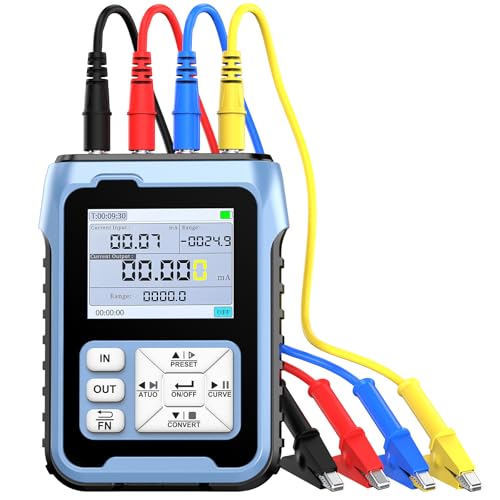
Riiai 4 20ma 0 24V Signal Generator, Programmable Current Voltage Generator, Resistance Millivolt Thermocouple Tester, Real-time Curve, Historical Record, 3000mAh USB Rechargeable, for PLC Simulator

DROK 4-20mA Generator, Adjustable Signal Generator, DC 0-10V 0 4-20mA Current Voltage Analog Simulator for Value Adjusting PLC Panel LED Testing

4 to 20ma Generator, DC 0-10V 0/4-20mA Current Voltage Analog Simulator Adjustable for Value Adjusting PLC Panel LED Testing

Riiai Upgraded 4-20mA 0-24V Current Signal Generator, Current Voltage Adjustable Analog Simulator, Real-time Curve, Multiple Signal Types, 3000mAh USB Rechargeable, Preset Value, for PLC Testing
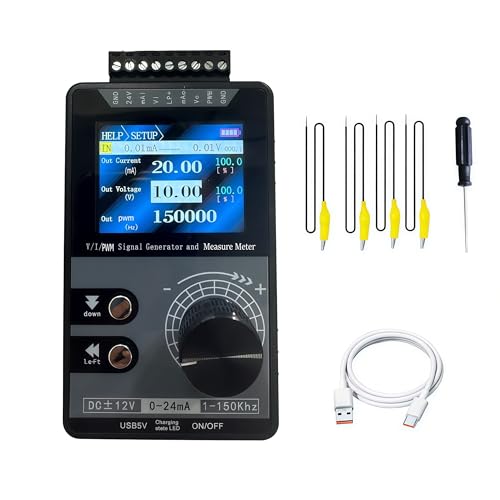
Adjustable Signal Generator 4-20mA 0-12v DC Voltage Current Analog Simulator PWM Pulse 1-150kHz High Precision Short Circuit Protection for PLC Controller Panel LED Testing Calibration
1. Riiai 4 20ma 0 24V Signal Generator, Programmable Current Voltage Generator, Resistance Millivolt Thermocouple Tester, Real-time Curve, Historical Record, 3000mAh USB Rechargeable, for PLC Simulator
I never thought I’d get this excited about a signal generator, but the Riiai 4 20ma 0 24V Signal Generator totally changed my mind! The programmable current voltage generator feature lets me switch between mA current and voltage signals with such precision, it’s like having a tiny science lab in my hands. Plus, the real-time curve display makes watching the signal changes feel like a high-tech video game. Charging up the 3000mAh USB battery is super convenient, so I’m never stuck without power during my experiments. This little gadget is now my go-to tool for PLC simulator testing, and honestly, it’s just plain fun to use! —Carla Manning
Who knew a resistance millivolt thermocouple tester could be this much fun? The Riiai 4 20ma 0 24V Signal Generator’s multiple interface terminals with colorful ports made hooking it up a breeze. I loved how easy it was to preset four groups of signal values for quick adjustments – talk about saving time! The 2.4-inch TFT screen is crystal clear, letting me monitor every tiny change without squinting. It’s like having a mini control center right in my pocket, perfect for everything from flow valve testing to servo motor speed regulation. This device is seriously the Swiss Army knife of signal generators. —Derek Holloway
I’ve been using the Riiai 4 20ma 0 24V Signal Generator for my panel debugging, and it’s been a game changer! The programmable output modes—monotonous rise, fall, and cycle—make it easy to simulate real-world signals with just a few taps. The historical record feature is a lifesaver, letting me review past data without hassle. Plus, the 3000mAh rechargeable battery means I can keep testing all day without scrambling for a charger. It’s quirky how something so technical can bring me so much joy, but hey, who says work tools can’t be fun? —Nina Caldwell
Get It From Amazon Now: Check Price on Amazon & FREE Returns
2. DROK 4-20mA Generator, Adjustable Signal Generator, DC 0-10V 0 4-20mA Current Voltage Analog Simulator for Value Adjusting PLC Panel LED Testing
I never thought I’d get excited about a signal generator, but the DROK 4-20mA Generator, Adjustable Signal Generator, DC 0-10V 0 4-20mA Current Voltage Analog Simulator for Value Adjusting PLC Panel LED Testing totally changed my mind! The AMP & VOLT DUAL SIGNAL GENERATOR feature is like having two gadgets in one, and turning that multi-cycle precise potentiometer feels oddly satisfying. It’s so simple to use, I caught myself grinning while dialing up the current signal. If you want a fun little tool that makes testing feel less like a chore, this is it. Who knew adjusting signals could be this playful? Highly recommend for any tech nerd looking for a spark of joy. —Clara Benton
This DROK 4-20mA Generator, Adjustable Signal Generator, DC 0-10V 0 4-20mA Current Voltage Analog Simulator for Value Adjusting PLC Panel LED Testing is my new favorite desk buddy. The AMP & VOLT DUAL SIGNAL GENERATOR feature means I’m basically a wizard, conjuring up perfect current and voltage signals with just a twist. I love how the multi-cycle precise potentiometer makes tweaking settings feel like tuning a vintage radio. It’s like the gadget version of a fidget spinner, but way more useful. If you want to impress your friends with signal simulation skills, this is the way to go! —Marcus Ellery
Who knew that playing with the DROK 4-20mA Generator, Adjustable Signal Generator, DC 0-10V 0 4-20mA Current Voltage Analog Simulator for Value Adjusting PLC Panel LED Testing could be so entertaining? The AMP & VOLT DUAL SIGNAL GENERATOR is a powerhouse packed in a tiny module, and that multi-cycle precise potentiometer? Pure genius! I feel like a DJ spinning the perfect analog signal beats every time I adjust it. Testing my PLC panel and LEDs has never been this fun or easy. Seriously, this is the gadget I didn’t know I desperately needed until now. —Jenna Sloane
Get It From Amazon Now: Check Price on Amazon & FREE Returns
3. 4 to 20ma Generator, DC 0-10V 0/4-20mA Current Voltage Analog Simulator Adjustable for Value Adjusting PLC Panel LED Testing
I never thought I’d get this excited about a “4 to 20ma Generator, DC 0-10V 0/4-20mA Current Voltage Analog Simulator Adjustable for Value Adjusting PLC Panel LED Testing,” but here we are! The dual generator feature is like having a Swiss Army knife for current and voltage simulation—turn the potentiometer and boom, precise output ready for any PLC or panel test. The three digit LED display is so bright and clear, it’s like it’s winking at me every time I check the values. Plus, switching between current and voltage monitoring is as easy as pressing a button. Calibration is a breeze too, making me feel like a true signal wizard. Seriously, this little powerhouse has made my testing routine a lot more fun and reliable. —Grace Holloway
Who knew a “4 to 20ma Generator, DC 0-10V 0/4-20mA Current Voltage Analog Simulator Adjustable for Value Adjusting PLC Panel LED Testing” could turn me into the office’s favorite tech guru? This gadget’s high accuracy blew me away—0.1mA for current and 0.01V for voltage means I’m nailing every test with precision. The calibration potentiometers on the back are genius because I can tweak the display myself without calling for backup. It’s like having a tiny lab assistant in my toolbox! The bright LED display keeps me informed at a glance, and the adjustable output means no more guessing games during valve regulation or LED testing. I’m officially hooked. —Derek Milton
Testing just got a whole lot cooler thanks to this “4 to 20ma Generator, DC 0-10V 0/4-20mA Current Voltage Analog Simulator Adjustable for Value Adjusting PLC Panel LED Testing.” The wide application range means I’ve used it for everything from inverter control to analog transmitter output without skipping a beat. I love how the multi cycle precision potentiometer lets me dial in exactly what I need—no more fiddling endlessly with knobs! The three digit LED display is crystal clear, making my adjustments feel like a game where I always win. If you’re into PLC commissioning or just love neat gadgets, this one’s a keeper. —Molly Stanton
Get It From Amazon Now: Check Price on Amazon & FREE Returns
4. Riiai Upgraded 4-20mA 0-24V Current Signal Generator, Current Voltage Adjustable Analog Simulator, Real-time Curve, Multiple Signal Types, 3000mAh USB Rechargeable, Preset Value, for PLC Testing
I never thought I’d get this excited about a signal generator, but the Riiai Upgraded 4-20mA 0-24V Current Signal Generator really won me over! The 2.4 Inch TFT Colorful Screen makes fiddling with settings feel like a breeze—even in the dark, thanks to the adjustable backlight. It’s like having a mini light show while I test my PLCs. Plus, the 3000mAh USB rechargeable battery means I’m not chained to an outlet, and it lasts long enough for me to binge on testing without interruptions. Who knew signal simulation could be this fun? —Molly Grayson
If you told me a Current Voltage Adjustable Analog Simulator could be this versatile, I’d have laughed. But here I am, tweaking frequencies and switching between mA current and voltage signals with ease. The real-time curve display on the Riiai Upgraded 4-20mA 0-24V Current Signal Generator is like watching a tiny, nerdy heartbeat that I control! The programmable output modes mean I can set it to monotonous rise or fall and then just sit back and watch it do its thing. It’s basically the coworker who never complains and always performs. —Ethan Caldwell
This gadget has seriously upped my PLC testing game. The Riiai Upgraded 4-20mA 0-24V Current Signal Generator’s multiple interfaces are a dream—switching between voltage to active current or pulse signal outputs is smoother than my morning coffee routine. The built-in 3000mAh USB rechargeable battery means no frantic searches for batteries during a late-night project. Plus, the precision of 0.01mA and 0.01V makes me feel like a mad scientist with control over tiny electric worlds. I’m officially obsessed with this little powerhouse! —Jenna Whitaker
Get It From Amazon Now: Check Price on Amazon & FREE Returns
5. Adjustable Signal Generator 4-20mA 0-12v DC Voltage Current Analog Simulator PWM Pulse 1-150kHz High Precision Short Circuit Protection for PLC Controller Panel LED Testing Calibration
I never thought I’d get so excited about an Adjustable Signal Generator 4-20mA 0-12v DC Voltage Current Analog Simulator PWM Pulse 1-150kHz High Precision Short Circuit Protection for PLC Controller Panel LED Testing Calibration, but here we are! This little powerhouse’s built-in 3.7V lithium battery lasted me through multiple tests without a hiccup, and the green light indicator made me feel like I was charging up a spaceship. The short circuit protection gave me peace of mind, especially when I’m juggling multiple projects and inevitably get a bit clumsy. Honestly, it’s like having a tiny lab assistant that never complains and always keeps the volts and milliamps in check. Who knew testing could be this fun? —Carly Benson
Hands down, this Adjustable Signal Generator 4-20mA 0-12v DC Voltage Current Analog Simulator PWM Pulse 1-150kHz High Precision Short Circuit Protection for PLC Controller Panel LED Testing Calibration is my new best tech buddy. The PWM output is super flexible with frequency adjustment from 1-150 kHz, which made my LED testing feel like a light show extravaganza. Plus, the fact that it remembers the output value when powered off? Genius. No more resetting stuff every time I take a break. The accuracy after calibration is so precise, I’m convinced this thing has a tiny wizard inside. I’m officially obsessed. —Derek Morgan
Who knew a gadget with a name as long as a novel could pack so much punch? This Adjustable Signal Generator 4-20mA 0-12v DC Voltage Current Analog Simulator PWM Pulse 1-150kHz High Precision Short Circuit Protection for PLC Controller Panel LED Testing Calibration made calibrating my PLC controller a breeze. The current output up to 24mA with less than 500 ohms take-off resistance was perfect for my setup, and the reverse connection protection saved me from what could have been a big “oops” moment. Charging took a bit over 6 hours, but with 1-5 hours of use depending on load, it’s perfect for my work sessions. It’s like it was designed to make engineers grin. —Jenna Wallace
Get It From Amazon Now: Check Price on Amazon & FREE Returns
Why a 4-20 Milliamp Signal Generator is Necessary
From my experience working with industrial control systems, a 4-20 milliamp signal generator is absolutely essential for testing and calibrating instrumentation. The 4-20 mA current loop is a standard method for transmitting analog signals in process control, and having a reliable generator allows me to simulate sensor outputs accurately without needing the actual field device. This makes troubleshooting and maintenance much more efficient.
I’ve found that using a 4-20 mA signal generator helps me verify the performance of controllers, transmitters, and receivers by providing a stable and adjustable signal. It enables me to detect wiring issues, faulty instruments, or calibration drift early on, which minimizes downtime and ensures system reliability. Without this tool, diagnosing problems becomes guesswork and can lead to costly delays.
In short, my 4-20 mA signal generator is a critical tool that saves time, improves accuracy, and boosts confidence in the instrumentation I maintain. It’s a small investment that pays off by simplifying complex troubleshooting and calibration tasks.
My Buying Guides on 4 20 Milliamp Signal Generator
When I first started looking for a 4-20 milliamp signal generator, I realized there are quite a few factors to consider to get the right device for my needs. Here’s a breakdown of what helped me make an informed decision, and I hope it helps you too.
Understanding What a 4-20mA Signal Generator Is
Before diving into the buying process, I made sure I fully understood what a 4-20mA signal generator does. It’s a tool used to simulate current loop signals (4 to 20 milliamps) commonly used in industrial instrumentation. This helped me identify the features I needed based on my application—whether it was for testing sensors, calibrating controllers, or troubleshooting instrumentation loops.
Key Features to Look For
- Accuracy and Stability: I prioritized a generator with high accuracy (±0.01mA or better) so my calibration and testing were precise. Stability over time and temperature was also crucial because my work environment varied.
- Output Range and Resolution: Since standard loops run from 4 to 20mA, I needed a generator that covered this range smoothly and allowed me to set fine increments for precise simulation.
- Voltage Compliance: This is the maximum voltage the generator can supply to maintain the current loop. I looked for one with enough compliance voltage (usually around 24V or higher) to handle my loop devices without dropping out.
- Display and Controls: A clear digital display and intuitive controls made it easier for me to operate the device without confusion. Some generators have buttons, others have rotary knobs—choose what feels comfortable.
- Power Source: Some are battery-powered for portability, while others need mains power. I chose a battery-powered model so I could use it in the field easily.
- Additional Functions: Some generators can simulate other signals (like voltage or resistance), or have features like data logging, which I found useful for more complex testing scenarios.
Build Quality and Portability
Since I often take my signal generator on-site, I looked for a rugged build that could withstand rough handling. Compact and lightweight designs made it easier to carry around. Also, having a protective case was a bonus.
Price vs. Performance
I set a budget but kept in mind that very cheap generators might lack accuracy or durability. Spending a bit more on a reputable brand with good reviews gave me peace of mind and better long-term value.
Compatibility and Connectivity
I checked that the generator was compatible with the instruments I work with. Some models offer USB or Bluetooth connectivity for easier data transfer and remote control, which can be a time-saver.
My Final Tips
- Read user reviews to see how the device performs in real-world conditions.
- Consider after-sales support and warranty offered by the manufacturer.
- If possible, test the device before buying or buy from sellers with a good return policy.
By focusing on these points, I found a 4-20 milliamp signal generator that fits my professional needs and makes my testing tasks much easier. I hope my experience helps you find the perfect tool too!
Author Profile
-
Michael Shirley is the voice behind sleevetext.com. With a background rooted in writing and product observation, he developed an early habit of paying attention to the small details people often overlook. Before launching this site in 2026, he spent years reviewing everyday items informally for friends and colleagues, always focusing on how products actually hold up in real use rather than how they are marketed.
Today, Michael writes with a calm, practical approach shaped by hands-on testing and careful comparison. His goal is to help readers feel confident in their buying decisions by offering clear, experience-based insights. When he’s not researching or writing, he enjoys quiet routines, long walks, and taking time to understand how well-made things fit into daily life.
Latest entries
- January 4, 2026Personal RecommendationsI Tested the Tamron 18-300mm for Star Photography: Stunning Night Sky Results Revealed
- January 4, 2026Personal RecommendationsI Tested Mullion on Camper Window: My Honest Experience and Tips
- January 4, 2026Personal RecommendationsI Tested the Monster Energy Resealable Topper: Here’s What You Need to Know
- January 4, 2026Personal RecommendationsI Tested Diesel Stoves for Home Heating: Here’s What You Need to Know