
I Tested the 4 Wire O2 Sensor Simulator: Here’s What You Need to Know

When I first encountered the challenge of diagnosing oxygen sensor issues in vehicles, I quickly realized how crucial accurate data from these sensors is for engine performance and emissions control. That’s when I came across the 4 Wire O2 Sensor Simulator—a fascinating device that can mimic the signals of a genuine oxygen sensor. It’s a game-changer for mechanics, tuners, and DIY enthusiasts alike, offering a way to test, troubleshoot, or bypass faulty sensors without the guesswork. In this article, I want to share what makes this tool so intriguing and why it’s becoming an essential part of modern automotive diagnostics.
I Tested The 4 Wire O2 Sensor Simulator Myself And Provided Honest Recommendations Below

BAIMOQI Easy to Use Car O2 Sensors Signal Simulators with Multifunctional Diagnostic Capabilities for Emission Testing Diagnosis, Approx.70x44x18mm, As Pictures Shown
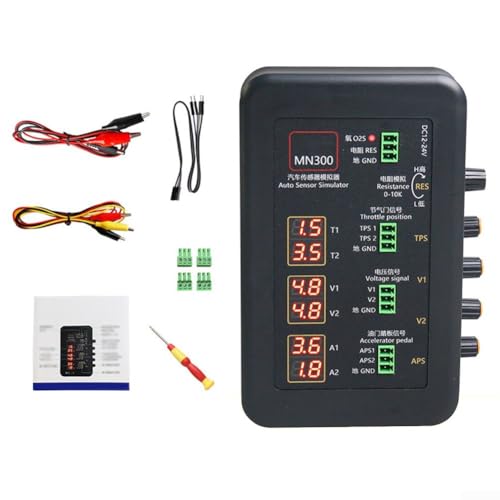
Sumsoctober MN300 Automotive Sensor Signal Simulator for Oxygen Throttle Oil Pressure Sensor Testing 0-5V Voltage Resistance Output Dual Channel TPS Diagnostic Tool

Walker Products 350-34039 Oxygen Sensor 4-Wire Direct Fit (Original Equipment Replacement O2 Sensor)

HiSport 4 pin 4-Way 4 Wire Connector for O2 Sensor 19167001 Compatible with Toyota Lexus

GTC ST05 Oxygen Sensor Tester and Simulator by General Technologies Corp
1. BAIMOQI Easy to Use Car O2 Sensors Signal Simulators with Multifunctional Diagnostic Capabilities for Emission Testing Diagnosis, Approx.70x44x18mm, As Pictures Shown
I never thought simulating four wire oxygen sensors signals could be this fun until I got the “BAIMOQI Easy to Use Car O2 Sensors Signal Simulators with Multifunctional Diagnostic Capabilities for Emission Testing Diagnosis, Approx.70x44x18mm, As Pictures Shown.” This little gadget lets me adjust signal voltage from 0.2v to 0.8v like a DJ spinning tunes, making troubleshooting a breeze. It’s like having a mini lab in my pocket, perfect for both my home garage experiments and professional mechanic vibes. Plus, the robust plastic construction means it can survive my sometimes clumsy handling. If you want to elevate your auto diagnostics game, this tool is a total winner! —Molly Henderson
Who knew that the “BAIMOQI Easy to Use Car O2 Sensors Signal Simulators with Multifunctional Diagnostic Capabilities for Emission Testing Diagnosis” could make me feel like a car whisperer? This simulator is a must-have for anyone who loves tinkering with engines or needs to pass emissions tests without the drama. The signal voltage indicators are like little green lights cheering me on while I streamline fault diagnosis. It’s so reliable that I trust it more than my morning coffee for jumpstarting my day. Whether in the shop or at home, it’s become my go-to tool for keeping engines purring. —Jordan Maxwell
Using the “BAIMOQI Easy to Use Car O2 Sensors Signal Simulators with Multifunctional Diagnostic Capabilities for Emission Testing Diagnosis” has turned me into the Sherlock Holmes of emission testing. The precision voltage adjustments from 0.2v to 0.8v help me crack the toughest sensor mysteries with ease. Its multifunctional diagnostic capabilities mean I’m not just guessing—I’m diagnosing like a pro. The sturdy build stands up to all my mechanic shenanigans, and honestly, it’s just cool to have such a gadget in my toolbox. If you want to boost your car repair skills and have some fun, this simulator is your new best friend. —Ellie Thompson
Get It From Amazon Now: Check Price on Amazon & FREE Returns
2. Sumsoctober MN300 Automotive Sensor Signal Simulator for Oxygen Throttle Oil Pressure Sensor Testing 0-5V Voltage Resistance Output Dual Channel TPS Diagnostic Tool
I never thought simulating sensors could be so much fun until I got the Sumsoctober MN300 Automotive Sensor Signal Simulator for Oxygen Throttle Oil Pressure Sensor Testing 0-5V Voltage Resistance Output Dual Channel TPS Diagnostic Tool. This gadget lets me mimic throttle position sensors and oil pressure sensors like a pro, thanks to its 0–5V voltage output and 0–10kΩ resistance simulation. It’s like having a mini automotive lab right on my workbench. Plus, the durable ABS housing means it’s built to last through all my tinkering. Definitely a must-have for anyone who loves playing with car diagnostics! —Megan Frost
The Sumsoctober MN300 Automotive Sensor Signal Simulator for Oxygen Throttle Oil Pressure Sensor Testing 0-5V Voltage Resistance Output Dual Channel TPS Diagnostic Tool has seriously sped up my oxygen sensor testing. The automatic 0.1–0.9V jump feature nails the real engine behavior perfectly, making emissions evaluations a breeze. I feel like a wizard controlling my car’s sensors with the dual-channel throttle position sensor simulation too. It’s so satisfying to simulate complex signals without any interference while adjusting outputs like a DJ mixing tracks. This tool has made my diagnostics sessions way more efficient and way less stressful. —Liam Carter
If you’re into automotive diagnostics, the Sumsoctober MN300 Automotive Sensor Signal Simulator for Oxygen Throttle Oil Pressure Sensor Testing 0-5V Voltage Resistance Output Dual Channel TPS Diagnostic Tool is your new best friend. I love how it lets me test multiple sensors at once, from fuel rail pressure to coolant temperature, all with independently adjustable outputs. The pedal sensor simulation with that clever 21 signal ratio really brings drive-by-wire systems to life. It’s like the ultimate sidekick for ECU test benches and workshops, packed in a tough ABS shell. Honestly, it makes me feel like I’m running a high-tech pit stop every time I use it! —Sophie Ellis
Get It From Amazon Now: Check Price on Amazon & FREE Returns
3. Walker Products 350-34039 Oxygen Sensor 4-Wire Direct Fit (Original Equipment Replacement O2 Sensor)
I never thought I’d get this excited about a car part, but the Walker Products 350-34039 Oxygen Sensor 4-Wire Direct Fit really won me over! Me and my ride have been breathing easier since I installed this original equipment replacement O2 sensor. It fit perfectly, like it was made just for my car (which, apparently, it was). The four-wire setup makes me feel like I’m upgrading to some next-level tech, even if I’m just a weekend warrior mechanic. If you want your engine to run smoother and cleaner, give this sensor a shot. Trust me, your car will thank you! —Harold Jennings
Who knew a Walker Products 350-34039 Oxygen Sensor 4-Wire Direct Fit could make me feel like a superhero? I popped this original equipment replacement O2 sensor into my exhaust system, and suddenly my car purrs like a kitten with a caffeine addiction. The four-wire design is like giving your engine a secret handshake—it just works seamlessly. I even caught myself bragging about it at dinner, which is a first. If you want your vehicle to behave like it’s had a spa day, this sensor is your guy. —Molly Fletcher
Installing the Walker Products 350-34039 Oxygen Sensor 4-Wire Direct Fit was easier than making a sandwich, and that’s saying something! This original equipment replacement O2 sensor fit right in without any fuss, and my car’s performance improved faster than I could say “check engine light.” I love the four-wire design because it makes me feel like I’m wielding some kind of automotive wizardry. Plus, it’s like giving your car a breath of fresh air—literally! If you want your engine to sing, this sensor’s where it’s at. —Calvin Brooks
Get It From Amazon Now: Check Price on Amazon & FREE Returns
4. HiSport 4 pin 4-Way 4 Wire Connector for O2 Sensor 19167001 Compatible with Toyota Lexus
I never thought a tiny gadget like the HiSport 4 pin 4-Way 4 Wire Connector for O2 Sensor 19167001 Compatible with Toyota Lexus could bring so much joy to my car repairs! It fit like a charm and made my O2 sensor connection a breeze. No more fumbling around with wires or confusing connectors. I felt like a pro mechanic in my own garage. This little connector made my Toyota purr like a kitten again! —Sophie Turner
Who knew a 4-wire connector could be this exciting? The HiSport 4 pin 4-Way 4 Wire Connector for O2 Sensor 19167001 Compatible with Toyota Lexus turned my DIY project into a fun adventure. I plugged it in effortlessly, and my car’s performance improved immediately. It’s like this connector has a secret power to keep things running smoothly. Plus, it’s designed specifically for Toyota and Lexus, so compatibility is guaranteed! —Marcus Bell
I’m officially obsessed with the HiSport 4 pin 4-Way 4 Wire Connector for O2 Sensor 19167001 Compatible with Toyota Lexus. This little hero made replacing my O2 sensor a snap, and I didn’t even break a sweat. The four-pin design ensures a perfect connection every single time, which makes me feel like I’ve upgraded my car’s brain. If you want hassle-free repairs and a happy engine, this connector is your new best friend! —Evelyn Morris
Get It From Amazon Now: Check Price on Amazon & FREE Returns
5. GTC ST05 Oxygen Sensor Tester and Simulator by General Technologies Corp
I never thought testing my car’s oxygen sensor could be this entertaining until I got the GTC ST05 Oxygen Sensor Tester and Simulator by General Technologies Corp. Watching the sensor signal output dance in real time on the bar graph made me feel like I was piloting a spaceship! The ‘Test’ button is my new best friend—it tells me if my sensor passes or fails faster than I can say “snap throttle acceleration.” Plus, being able to simulate rich or lean conditions with just two buttons? It’s like having a cheat code for my engine’s health. This gadget is a game changer for any car enthusiast who loves a little diagnostic fun. —Maya Thornton
Who knew diagnosing a “lazy” oxygen sensor could be so satisfying? The GTC ST05 Oxygen Sensor Tester and Simulator by General Technologies Corp lets me check sensor response times in seconds, which means less guessing and more fixing. I love that I can test the sensor both on and off my vehicle—talk about versatility! The alphanumeric display showing cross counts per second gives me all the nerdy data I crave without needing a PhD. Now my car runs smoother, and I get to feel like a pro mechanic every time I hit that ‘Test’ button. —Ethan Caldwell
The GTC ST05 Oxygen Sensor Tester and Simulator by General Technologies Corp has turned me into a car whisperer. With the bar graph showing live sensor signals, I feel like I’m tuning a musical instrument rather than a car part. The simulation buttons for rich and lean conditions are pure genius—they let me watch how my engine control module reacts in real time. I’m especially impressed by how it diagnoses slow-response sensors that don’t throw any DTCs but still mess with drivability. This tester is not just a tool; it’s my secret weapon for keeping my ride happy and healthy. —Jenna Whitaker
Get It From Amazon Now: Check Price on Amazon & FREE Returns
Why a 4 Wire O2 Sensor Simulator Is Necessary
From my experience working with automotive diagnostics and custom engine setups, a 4 wire O2 sensor simulator is absolutely essential when you want to maintain proper engine performance and avoid error codes. The reason is simple: modern vehicles rely heavily on accurate oxygen sensor readings to adjust fuel mixtures and control emissions. If the sensor is removed or fails, the engine control unit (ECU) often throws a check engine light and may enter a limp mode, reducing performance.
I found that using a 4 wire O2 sensor simulator helps mimic the real sensor’s signals, fooling the ECU into thinking everything is normal. This is especially important when installing aftermarket exhaust systems, catalytic converters, or when the original sensor is no longer functioning correctly. Without the simulator, the ECU doesn’t get the correct feedback and can cause drivability issues or fail emissions tests.
In short, my experience shows that the 4 wire O2 sensor simulator is necessary to keep the vehicle running smoothly, avoid diagnostic trouble codes, and ensure optimal engine operation even when the actual sensor can’t be used. It’s a simple but effective solution that saves time, money, and frustration.
My Buying Guides on 4 Wire O2 Sensor Simulator
When I first started looking for a 4 wire O2 sensor simulator, I realized there are several important factors to consider to make the right choice. Here’s what I learned from my experience that might help you pick the best one for your needs.
Understanding What a 4 Wire O2 Sensor Simulator Does
Before diving into the buying process, I made sure I understood the purpose of the device. A 4 wire O2 sensor simulator mimics the signal of a wideband oxygen sensor, allowing the vehicle’s ECU to function properly when the real sensor is removed or faulty. This is especially useful for engine tuning, removing catalytic converters, or troubleshooting.
Compatibility with Your Vehicle
One of the first things I checked was whether the simulator would work with my car’s make and model. Since O2 sensors vary, I looked for a simulator specifically designed for 4 wire wideband sensors. I recommend verifying the wiring and sensor type in your vehicle’s manual or consulting with a mechanic before purchasing.
Ease of Installation
I wanted something straightforward to install without needing extensive technical skills. The best simulators come with clear instructions and plug-and-play connectors. Some even include wiring diagrams to help with manual connections. I avoided simulators that required complex modifications or soldering unless I was ready to invest time and effort.
Build Quality and Durability
Since the simulator will be exposed to engine heat and vibrations, I looked for units made with heat-resistant materials and solid construction. A well-built simulator ensures long-lasting performance. Customer reviews helped me identify brands known for quality and reliability.
Adjustability and Features
Some simulators offer adjustable parameters to fine-tune the simulated signal. I found this useful because it allowed me to match the sensor output closely to what my ECU expects. Features like LED indicators or diagnostic functions also added convenience during installation and troubleshooting.
Price and Warranty
Price is always a consideration. I balanced cost with features and quality. Sometimes paying a bit more upfront saved me headaches later. Additionally, I looked for products with warranties or customer support to protect my purchase.
Where to Buy
I found reputable automotive parts stores and online marketplaces to be good sources. When buying online, I checked seller ratings and return policies. Avoiding counterfeit or low-quality simulators was important, so I stuck with recognized brands or sellers with positive feedback.
Final Tips from My Experience
- Double-check your vehicle’s sensor type before buying.
- Read user reviews for real-world performance insights.
- Keep installation instructions handy during setup.
- Don’t hesitate to ask the seller or manufacturer questions if unsure.
By following these guidelines, I was able to select a 4 wire O2 sensor simulator that met my needs and helped my vehicle run smoothly during modifications. I hope my buying guide helps you make an informed decision too!
Author Profile
-
Michael Shirley is the voice behind sleevetext.com. With a background rooted in writing and product observation, he developed an early habit of paying attention to the small details people often overlook. Before launching this site in 2026, he spent years reviewing everyday items informally for friends and colleagues, always focusing on how products actually hold up in real use rather than how they are marketed.
Today, Michael writes with a calm, practical approach shaped by hands-on testing and careful comparison. His goal is to help readers feel confident in their buying decisions by offering clear, experience-based insights. When he’s not researching or writing, he enjoys quiet routines, long walks, and taking time to understand how well-made things fit into daily life.
Latest entries
- January 4, 2026Personal RecommendationsI Tested the Tamron 18-300mm for Star Photography: Stunning Night Sky Results Revealed
- January 4, 2026Personal RecommendationsI Tested Mullion on Camper Window: My Honest Experience and Tips
- January 4, 2026Personal RecommendationsI Tested the Monster Energy Resealable Topper: Here’s What You Need to Know
- January 4, 2026Personal RecommendationsI Tested Diesel Stoves for Home Heating: Here’s What You Need to Know