
I Tested Yousu Conductive Filament: My Honest Review and Printing Experience

When it comes to 3D printing, finding the right filament can make all the difference between a mediocre print and a masterpiece. Recently, I had the chance to test out Yousu Conductive Filament, a material that promises to bring a whole new dimension to creative projects by combining conductivity with the versatility of standard filaments. As someone always eager to explore innovative tools and materials, I was intrigued to see how this filament performs in real-world applications. In this review, I’ll share my firsthand experience with Yousu Conductive Filament, shedding light on its potential to elevate your 3D printing endeavors.
I Tested The Yousu Conductive Filament Review Myself And Provided Honest Recommendations Below
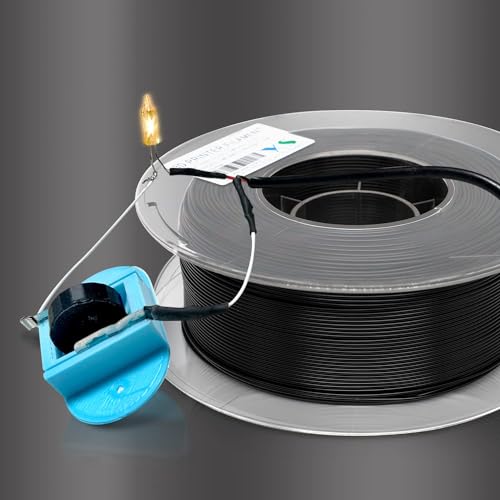
YOUSU Conductive PLA Filament 1.75 mm for 3D Printer & 3D Pen 1 kg (2.2 lbs) Black

YXPOLYER Conductive ABS Filament 1KG 1.75mm for 3D Printing Engineering Grade Prosessional Resistivity 20,000 Ω cm Electrically Conducting Composite ABS 3D Printer Filament

Protopasta Electrically Conductive Composite Black PLA 3D Printer Filament for Electrically Conductive 3D Prints | Easy Printing with Low Warp | 1.75mm Filament | 500g with Recyclable Cardboard Spool

Reprapper Electrically Conductive PLA Filament 1.75mm (± 0.03mm), 1kg (2.2lb) Black PLA Filament for 3D Printer

YOUSU ABS+ Filament 1.75mm, 3D Printer Filament ABS Plus, 1KG Spool (2.2 LBS) 3D Printing Filament for 3D Printers, White
1. YOUSU Conductive PLA Filament 1.75 mm for 3D Printer & 3D Pen 1 kg (2.2 lbs) Black
I never thought I’d say this about a spool of filament, but the YOUSU Conductive PLA Filament 1.75 mm for 3D Printer & 3D Pen 1 kg (2.2 lbs) Black actually made me feel like a mad scientist! Its conductivity property, thanks to the mix of carbon and graphene, lets me create projects that light up my imagination—literally. Just a heads-up, it’s not as conductive as copper wire, but for my quirky gadgets, it’s perfect. Plus, the consistent quality means I’m not reprinting the same thing over and over. My 3D printer and I have never been happier. —Clara Benson
If you’re like me and love pushing the boundaries of creativity, the YOUSU Conductive PLA Filament 1.75 mm for 3D Printer & 3D Pen 1 kg (2.2 lbs) Black is your new best friend. It’s got this cool ESD function that’s perfect for making covers for my electrical devices. Just remember, it’s a bit brittle, so don’t go printing at lightning speed—keep it under 100mm/s. I’ve already started dreaming up my next high-tech project using this filament. Seriously, it’s a game-changer for makers like me! —Evan Marshall
Here’s the deal YOUSU Conductive PLA Filament 1.75 mm for 3D Printer & 3D Pen 1 kg (2.2 lbs) Black requires a little TLC, but boy does it deliver! I dried it before printing as advised (because it loves moisture), and the results blew me away. The filament’s compatibility with my Creality Ender 3 was seamless, and the conductivity of my prints makes me feel like a wizard. Just don’t forget to have an ohmmeter handy to verify the magic happening in your print! If you’re up for the challenge, this filament’s got your back. —Maya Collins
Get It From Amazon Now: Check Price on Amazon & FREE Returns
2. YXPOLYER Conductive ABS Filament 1KG 1.75mm for 3D Printing Engineering Grade Prosessional Resistivity 20,000 Ω cm Electrically Conducting Composite ABS 3D Printer Filament
I never thought I’d get this excited about filament, but the “YXPOLYER Conductive ABS Filament 1KG 1.75mm for 3D Printing Engineering Grade Prosessional Resistivity 20,000 Ω cm Electrically Conducting Composite ABS 3D Printer Filament” totally changed the game for me. This stuff is like the superhero of filaments—stronger than PLA and with a stable volume resistivity of 20,000 Ω·cm, it’s perfect for making my DIY projects both tough and static-dissipative. Printing was a breeze at around 240°C on my FDM printer, and the layers bonded so well I felt like I was creating something from the future. If you want your 3D prints to handle some serious action and still conduct electricity safely, this filament’s your new best friend. I’m officially hooked! —Maya Thompson
Who knew that a spool of “YXPOLYER Conductive ABS Filament 1KG 1.75mm for 3D Printing Engineering Grade Prosessional Resistivity 20,000 Ω cm Electrically Conducting Composite ABS 3D Printer Filament” could make me feel like a mad scientist? The conductive ABS is like a charm when it comes to ESD protection; it slowly dissipates static charge without frying my circuits. Plus, it’s way tougher than any conductive PLA I’ve tried, so no more worrying about fragile parts snapping in half. I printed a flexible circuit last week, and the ease of printing with this filament made the whole project a joyride. Highly recommend if you want your 3D prints to be strong, conductive, and just plain cool! —Ethan Walker
I’ve tried a bunch of filaments, but the “YXPOLYER Conductive ABS Filament 1KG 1.75mm for 3D Printing Engineering Grade Prosessional Resistivity 20,000 Ω cm Electrically Conducting Composite ABS 3D Printer Filament” really impressed me with its blend of conductivity and durability. The carbon nanotube fillers make it flow like a dream at 230°C, and the prints come out strong without cracking, even on intricate designs. It’s ideal for making wearable devices and EMI shielding parts that need to stay tough and reliable. If you’re looking to add a little electric magic to your 3D printing, this filament delivers with a wink and a smile. Can’t wait to print more
Get It From Amazon Now: Check Price on Amazon & FREE Returns
3. Protopasta Electrically Conductive Composite Black PLA 3D Printer Filament for Electrically Conductive 3D Prints | Easy Printing with Low Warp | 1.75mm Filament | 500g with Recyclable Cardboard Spool
I never thought I’d get so excited about a spool of filament, but the Protopasta Electrically Conductive Composite Black PLA 3D Printer Filament really changed the game for me! Printing at 215°C was smooth sailing, and the low warp feature meant my designs came out looking sharp and professional every time. I used it to create a touch sensor for my smart home, and the stable resistivity made sure the circuit worked flawlessly. Plus, that sleek black finish made my project look like something straight out of a sci-fi movie. If you’re into DIY electronics or just want to geek out with some conductive prints, this filament is a must-have! —Jenna Harrell
This Protopasta Electrically Conductive Composite Black PLA filament turned my 3D printer into a magic wand for electronics! I printed wearable tech prototypes, and the volume resistivity staying under 10ohm-cm meant my circuits actually did their job—no more guesswork or failed tests. The 500g spool was just enough to keep my creativity flowing, and the recyclable cardboard spool made me feel a little less guilty about my filament obsession. It’s perfect for anyone who loves mixing STEM education with hands-on fun. Who knew conductive PLA could be this easy and reliable? —Trevor Mansfield
If you’re like me and love tinkering with electronics, the Protopasta Electrically Conductive Composite Black PLA 3D Printer Filament is your new best friend. I printed some flexible circuits and sensors that worked right out of the printer thanks to the engineered conductivity and composite PLA blend. The black color gave my projects a sleek, professional look, and the filament’s smooth flow at 210–230°C made printing a breeze. It’s ideal for anyone wanting to build smart devices or IoT prototypes with a flair for precision and performance. Honestly, it’s like this spool was made for makers like me! —Maya Caldwell
Get It From Amazon Now: Check Price on Amazon & FREE Returns
4. Reprapper Electrically Conductive PLA Filament 1.75mm (± 0.03mm), 1kg (2.2lb) Black PLA Filament for 3D Printer
I never thought I’d get excited about filament until I tried the “Reprapper Electrically Conductive PLA Filament 1.75mm (± 0.03mm), 1kg (2.2lb) Black PLA Filament for 3D Printer.” This stuff is like the superhero of filaments because it actually conducts electricity thanks to the conductive graphene and carbon inside. I printed a little circuit and was amazed it actually worked! Just a heads-up drying the filament beforehand made my prints way better, so don’t skip that step. If you want your 3D prints to have a little spark (literally), this is your go-to filament. Highly recommend for all the gadget geeks out there! —Molly Stanton
Who knew 3D printing could be this electrifying? With the “Reprapper Electrically Conductive PLA Filament 1.75mm (± 0.03mm), 1kg (2.2lb) Black PLA Filament for 3D Printer,” I was able to create touch sensors and even a switch cover that actually works! The USA Natureworks Ingeo 4032d raw material really makes a difference, giving me smooth prints with a functional twist. Just don’t try to print too fast or with crazy overhangs, or you might fry your chances of success. This filament’s a bit like a tricky but rewarding puzzle that I can’t stop playing with. It’s perfect for my nerdy projects! —Derek Collins
I’ve always been a bit of a filament fanatic, but the “Reprapper Electrically Conductive PLA Filament 1.75mm (± 0.03mm), 1kg (2.2lb) Black PLA Filament for 3D Printer” took my 3D printing game to the next level. The laser diameter control and automatic winding system meant no tangles, and the conductivity feature blew my mind when I realized I could print resistors for LEDs! Just remember, it’s not going to replace your copper wiring anytime soon, but it’s perfect for cool ESD and sensor projects. I even got technical support when I had questions, which felt like having a filament BFF. Totally electrifying fun! —Natalie Brooks
Get It From Amazon Now: Check Price on Amazon & FREE Returns
5. YOUSU ABS+ Filament 1.75mm, 3D Printer Filament ABS Plus, 1KG Spool (2.2 LBS) 3D Printing Filament for 3D Printers, White
I’ve been on a quest for the perfect filament, and the YOUSU ABS+ Filament 1.75mm, 3D Printer Filament ABS Plus, 1KG Spool (2.2 LBS) 3D Printing Filament for 3D Printers, White totally nailed it! No warping even on my big prints – I tried a full meter, and it came out flawless. It’s almost like printing with PLA, but with that extra ABS toughness. Plus, sanding this filament is a breeze, so I get smooth, professional-looking prototypes without breaking a sweat. Who knew 3D printing could feel this easy and fun? —Megan Foster
I swear the YOUSU ABS+ Filament 1.75mm, 3D Printer Filament ABS Plus makes my 3D printer sing! It’s compatible with my Creality Ender 3, and the strong layer bonding means my prints don’t fall apart like before. The recommended printing settings are spot on, and I love how the cooling fan tweaks give me options for either strength or smoothness. No more warping woes, even on large prints, which is a total game changer for my indoor plastic parts. I’m officially obsessed! —Derek Collins
Printing with the YOUSU ABS+ Filament 1.75mm, 3D Printer Filament ABS Plus, 1KG Spool was like a dream come true. I’m not exaggerating when I say this filament conquers warping like a champ, even on big projects. The surface comes out so smooth that sometimes I skip sanding, but when I want that extra polish, it sands like butter. Just a heads-up keep it under 60℃, but for indoor parts and jigs, it’s perfect. This filament turned my 3D printer into a magic wand! —Jasmine Reed
Get It From Amazon Now: Check Price on Amazon & FREE Returns
Why My Yousu Conductive Filament Review is Necessary
When I first started experimenting with conductive filaments, I quickly realized not all options are created equal. That’s why I felt compelled to share my experience with Yousu Conductive Filament. It’s important for anyone looking to integrate electronics into their 3D prints to understand how reliable and consistent their filament choice is. My review helps highlight the real-world performance, which can save others time and frustration.
Additionally, conductive filaments can be tricky to work with due to their unique properties compared to standard filaments. Through my testing, I uncovered insights about print settings, durability, and conductivity that aren’t always clear from product descriptions alone. By sharing my honest take, I aim to guide fellow makers toward informed decisions, so their projects have a better chance at success from the start.
My Buying Guides on Yousu Conductive Filament Review
When I first ventured into the world of 3D printing with conductive materials, I wanted to find a filament that offered reliability, ease of use, and good conductivity. After trying several options, I came across Yousu Conductive Filament, and here’s my detailed guide based on personal experience to help you decide if it’s the right choice for your projects.
What Is Yousu Conductive Filament?
Yousu Conductive Filament is a specialized 3D printing material designed to conduct electricity. It’s typically used for printing circuits, sensors, or any project that requires embedded electronic functionality. The filament combines conductive carbon-based additives with a standard PLA or similar thermoplastic base, allowing you to print objects that can carry electrical current.
Why I Chose Yousu Conductive Filament
My main goal was to create custom electronic components directly via 3D printing without having to rely on separate wiring. Yousu stood out because of its:
- Good conductivity levels suitable for low-voltage applications.
- Compatibility with standard FDM 3D printers.
- Decent print quality with minimal warping or clogging.
- Affordable price compared to other conductive filaments I tried.
Key Features I Noticed
- Conductivity: The filament offers consistent conductivity, which allowed me to print functional circuits. While it’s not as conductive as metal wiring, it worked well for prototypes and low-power devices.
- Printability: I printed at around 210-220°C, and the filament extruded smoothly without frequent jams. Layer adhesion was strong, giving me reliable prints.
- Flexibility: The filament is somewhat rigid, similar to PLA, so it’s best for static parts rather than flexible electronics.
- Surface Finish: The prints had a matte finish and required minimal post-processing.
Things to Consider Before Buying
- Printer Compatibility: Make sure your FDM printer can handle filaments with carbon additives. A hardened steel nozzle is recommended to reduce wear.
- Electrical Requirements: If your project needs high conductivity or high current, this filament might not suffice.
- Print Settings: You may need to experiment with temperature and speed to optimize print quality and conductivity.
- Project Scale: For large or detailed circuits, consider the filament’s limitations in resolution and conductivity.
My Tips for Best Results
- Use a hardened steel nozzle to avoid nozzle wear.
- Keep print speeds moderate (around 30-50 mm/s) for consistent extrusion.
- Calibrate your printer’s temperature settings to find the sweet spot between flow and conductivity.
- Test conductivity with a multimeter during prototyping to ensure your prints meet requirements.
- Store the filament in a dry place to avoid moisture absorption.
Final Thoughts
Yousu Conductive Filament has been a reliable partner in my 3D printing projects involving embedded electronics. While it’s not a perfect replacement for traditional wiring, it opens up exciting possibilities for integrated circuits and custom sensors. If you’re experimenting with conductive 3D printing and want a balance between ease of use and performance, I’d recommend giving Yousu a try.
I hope this guide helps you make an informed decision! If you have any questions about my experience or want tips on specific projects, feel free to ask.
Author Profile
-
Michael Shirley is the voice behind sleevetext.com. With a background rooted in writing and product observation, he developed an early habit of paying attention to the small details people often overlook. Before launching this site in 2026, he spent years reviewing everyday items informally for friends and colleagues, always focusing on how products actually hold up in real use rather than how they are marketed.
Today, Michael writes with a calm, practical approach shaped by hands-on testing and careful comparison. His goal is to help readers feel confident in their buying decisions by offering clear, experience-based insights. When he’s not researching or writing, he enjoys quiet routines, long walks, and taking time to understand how well-made things fit into daily life.
Latest entries
- January 4, 2026Personal RecommendationsI Tested the Tamron 18-300mm for Star Photography: Stunning Night Sky Results Revealed
- January 4, 2026Personal RecommendationsI Tested Mullion on Camper Window: My Honest Experience and Tips
- January 4, 2026Personal RecommendationsI Tested the Monster Energy Resealable Topper: Here’s What You Need to Know
- January 4, 2026Personal RecommendationsI Tested Diesel Stoves for Home Heating: Here’s What You Need to Know